
Occupational Therapy
Occupational therapy is a client-centred health profession concerned with promoting health and well being through occupation. The primary goal of occupational therapy is to enable people to participate in the activities of everyday life (WFOT).
Goals Occupational therapy in mental health setting
Mental illnesses are among the leading causes of disability in the world and can lead to impairment of different areas of functioning such as Cognitive, Social, Self-care, Physical, and Economic functioning of an individual.
Therefore, the main goals of occupational therapy is to prevent disability, promote function, restore function and maintaining function which lead to independence, autonomy, or necessity of minimum assistance in the community (social re-integration).
Main Occupational Therapy Activities
1. ADLS (Activities of Daily Living) Retraining
This treatment activity refers to self-care for hygiene. It includes; brushing, bathing, cutting nails, dressing and washing clothes.
This therapeutic activity is really beneficial for many psychiatric patients as many of them are having neglect of body hygiene as symptoms, difficulty in recalling the steps that are involving in those activities, for the purpose of increasing good quality of health for the patient and minimize the stigma.
2. IADLS Retraining (Instrumental Activities of Daily Living)
IADLs refer to the activities that a person can do to care for others; like meal preparation for the family (peeling potatoes and bananas, washing dishes, cooking), washing clothes and home making.
Therefore, the psychiatric patients need to be engaged, it helps the patient increase self-confidence. After being discharged, the patient tells family what s/he did when s/he was at the hospital, now the family member will trust him/her and the family will allow him/her to participate in this activity.
3. Activities of Expression and Cognitive Rehabilitation
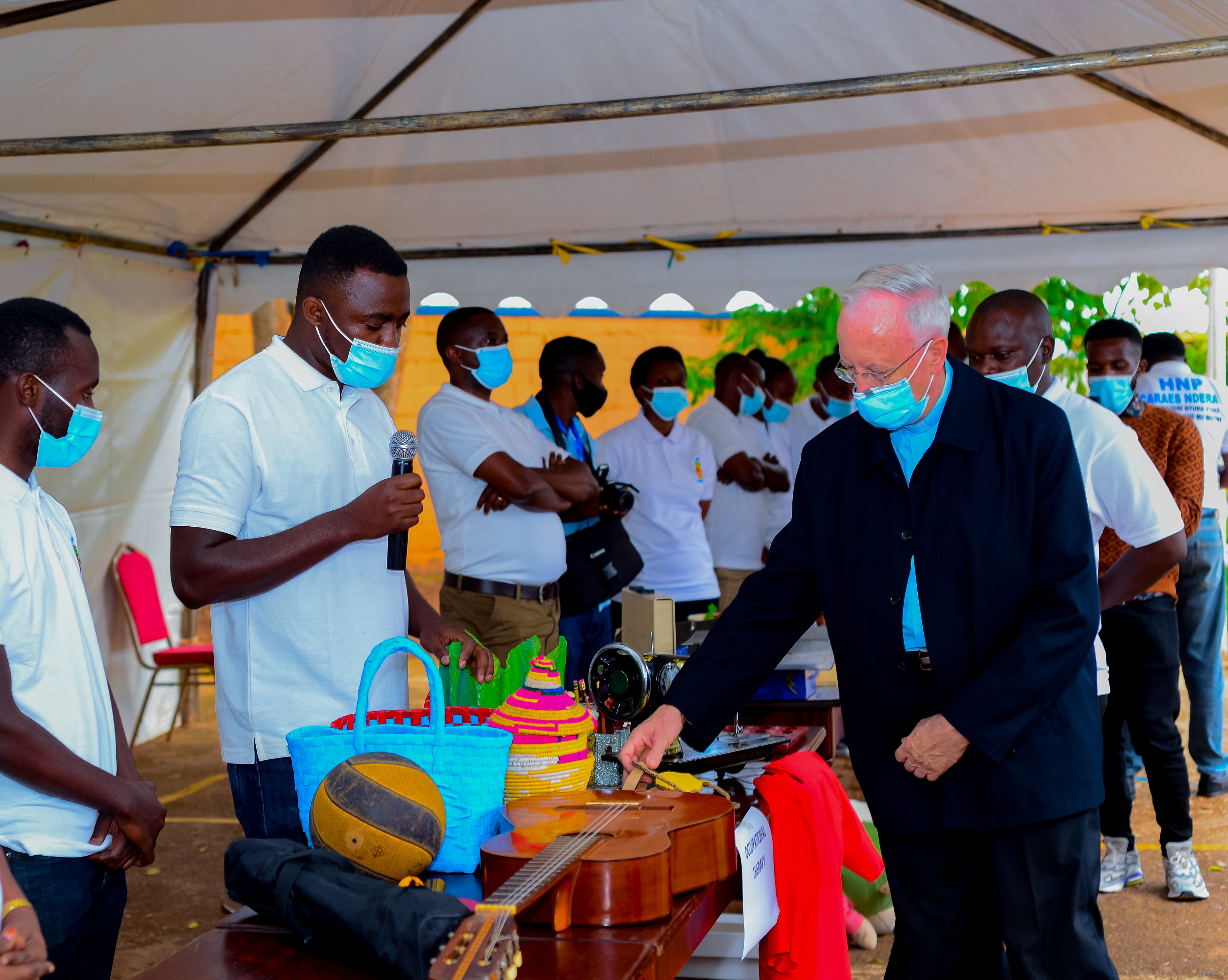
Art and craft (drawing, making basket, sewing activities, making envelope, painting and pottery); board games (dice, chess, Rudo, Dame, Igisoro and cards); crosswords; reading; writing; story telling.
These treatment activities improve socialization, increase self-esteem, attention and concentration, social interaction and confidence because when patient finishes one product like envelop, basket or figure shape he/she feels confident and increase self-esteem and patient can be creative.
4. Vocational and Productivity
A large number of psychiatric patients at the hospital had income-generating occupations before their admission. Therefore, it is better to maintain and restore the lost skills in order to reintegrate them in society. This involves horticulture (gardening and watering), tailoring, basket weaving and knitting.
This helps the clients maintain and restore their professional skills and reintegrate them in society at their home places.
5. Group therapy (milieu therapy)
We select the client and arrange them in the circle sitting, with rows where the quiet clients alternate with the active clients, and we select the topic which is mostly related to mental health disorders, epilepsy and Social behavior.
This therapeutic activity improves socialization, psychoeducation and evaluation.
6. Leisure Activities
The patient admitted in hospital are sometimes bored due to staying at one place, sometimes hopelessly, but when the patient participate in these leisure activities such as music and dance, outing, progressive muscle relaxation, Yoga sports, Olympic games and sports (basketball, volleyball, football and table tennis, it helps the patient with expressing their feeling and emotions, socialization and minimizing the side effects of medication. It also builds trust of the clients, that you give them freedom to go outside, and that you do not treat them like prisoners. It also improves the functioning of respiratory, circulatory, digestive and hormonal systems.
The aim of these activities is the reintegration of patients through works similar to those done in their families. The following activities were organized:
- Agriculture, cooking and other housework
- Breeding cows and goats
- Cleaning the pathways around the home
Other relaxation activities include dancing on Tuesdays with others patients in the multipurpose hall of the hospital and working every Thursday afternoon. The staff participated actively in every activity involving patients.